
The expected interest rate hike in the US and the resultant volatility in the domestic secondary market could play a dampener to the over Rs 2-trillion initial public offering (IPO) pipeline in 2022. IPOs in 2022 look promising, with as many as 35 companies holding the Securities and Exchange Board of India's approval to raise roughly Rs 50,000 crore. Another 33 companies are waiting for the regulator's nod to raise around Rs 60,000 crore next year.

'The IPO market is cooling off and getting a reality check.'

Expect fast-moving consumer goods makers (FMCG) to raise prices again next month owing to raw materials, transport, labour and packaging material costs remaining high or becoming even costlier. Whether it is packaged wheat flour and basmati rice or biscuits and shampoos, these products will become 2-10 per cent more expensive. Adani Wilmar will hike the price of its packaged wheat flour by 5-8 per cent and of its basmati rice by 8-10 per cent next month.

'It could tempt investors to pick stocks that are not fundamentally sound.'

The latest hike is likely to be followed by another such move next month, said industry players. Before the latest hike, companies had initiated price hikes to the tune of 12-13 per cent in 2021 but they weren't able to fully cover the increase in costs.

The RBI's financial stability report has on Wednesday highlighted the disconnect between the real economy and equity market yet again. The central bank observed that Indian equities were trading at rich valuations, with several metrics such as price to earnings multiples, price to book ratio, market cap to GDP and the cyclically adjusted P/E ratio, or Shiller P/E, at above historical averages. For instance, as on December 13, the one-year forward P/E ratio for India was 35.1 per cent, above its 10-year average, and one of the highest in the world.

Of the 59 IPOs for which the data is available, 36 IPOs received mega responses of more than 10x (of which, six IPOs more than 100x), while eight IPOs were oversubscribed more than 3x.

A December 28 board meeting of the Securities and Exchange Board of India (Sebi) may tighten norms for initial public offerings (IPOs). The board may look to prescribe a minimum 5 per cent gap in IPO price bands, extend the lock-in period for anchor investors to 90 days and cap the amount a majority investor can sell through offer for sale. The regulator is looking at whether there can be a preferred allocation for anchor investors who opt for a longer lock-in period, said a person familiar with the matter.

'The correction could take two to three months and traders need to be careful.' 'For investors, this could be a good time to nibble in.'

'We expect exports to touch Rs 1,000 crore by the end of the year.'

Oil-to-telecom conglomerate Reliance Industries (RIL) has emerged as the country's largest wealth creator, adding a staggering Rs 9.6 trillion over the past five years, according to Motilal Oswal's 26th Annual Wealth Creation Study. In doing so, the Mukesh Ambani-led company has beaten its own record of Rs 5.6 trillion generated in 2014-19. The study covered financial year 2015-16 (FY16) to FY21 and ranks the top 100 companies in descending order of absolute wealth created, subject to the company's stock price outperforming the BSE Sensex. The firms were also ranked according to speed (price CAGR during the period).
Foreign portfolio investors (FPIs) and mutual funds (MFs) have put in more money as anchor investors in initial public offerings (IPOs) in 2021 than any other year. FPIs' share of investments for the year stood at Rs 24,477 crore, nearly six times that put in last year and more than nine times the amount invested in 2019, the data from Prime Database showed. MFs have invested Rs 12,264 crore, four times than that invested last year and more than 10 times the investment in 2019. The total investment by FPIs and MFs put together this year is five times the amount invested last year. The amount contributed by MFs, however, is nearly half of that invested by FPIs.
However, the government's draft policy on e-commerce companies has forced consumer companies to also adapt to the changes. For Dabur India, e-commerce channel continues to be a key driver of growth in urban India. The contribution of online sales to its entire portfolio is at six per cent compared to 1.5 per cent before the pandemic.

Black Friday sales in India received a good response as brands dropped their prices making customers queue up outside stores where discounts were steeper. Discounts were offered both online and offline. Most of the international brands in India offered discounts under the Black Friday Sale banner. The Black Friday Sale started in the US on the Friday after Thanksgiving Thursday. The day typically marks the beginning of the Christmas shopping season ahead of the festival.

'We need to encourage the next generation of farmers to continue in farming'

Future Retail's (FRL's) independent directors have written a second letter to the Competition Commission of India (CCI), stating American e-commerce major Amazon never intended to invest in Future Coupons (FCPL) and the representations made by the US e-commerce player were completely opposite and contradictory to their own internal correspondences as submitted before courts. The directors also wrote to CCI that Amazon has obtained approval by making deliberate misrepresentations. By actively misleading the CCI and the regulator, it has to revoke the approval granted for Amazon's investment in FCPL.

India's stock exchanges have decided to jointly introduce the T+1 settlement cycle in phases from February 25, beginning with the bottom 100 stocks by market capitalisation. From March 2022, on the last Friday (or the immediate next trading day) of every month, the next 500 stocks from the bottom will be subject to T+1 settlement. The phase-wise implementation is expected to give all market participants, including foreign portfolio investors (FPIs), ample time to shift to the shorter cycle. The settlement cycle represents the time period within which the stock exchanges have to settle security transactions.
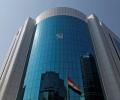
A global association for regulated funds that is leading efforts to shorten the settlement cycle for US equities has reached out to the Securities and Exchange Board of India (Sebi) with a plea to extend the T+1 implementation timeline by 18 months. The short transition period of four months does not provide foreign portfolio investors (FPIs), their services providers, and broker dealers sufficient time to make the necessary operational and compliance changes to accommodate a shorter settlement cycle, ICI Global said in its letter addressed to Sebi chairman Ajay Tyagi written a few days back. ICI Global carries out the international work of the Investment Company Institute (ICI), a global association for regulated funds, whose members manage assets of more than $42 trillion.

IT and ITeS companies accounted for $28.1 billion of the total investment pie during the first nine months of 2021.

The share of public sector undertakings (PSUs) in the total market capitalisation of listed companies--at an all-time low of 10 per cent currently --- may get a leg-up from the government's divestment push. Recently the government announced the successful sale of national carrier Air India to Tata Sons, India's first privatisation of a PSU since 2002-03. The transaction is expected to be completed by December.
 © 2026 Rediff.com - Advertise with us - Disclaimer - Privacy Policy - Sitemap - Feedback - About us - Terms of use - Grievances